
According to Google’s Core Web Vitals research, websites that fail to meet modern performance standards lose 53% of mobile visitors within three seconds. Modern website features have evolved far beyond basic contact forms and image galleries. Today’s successful websites integrate advanced functionality that directly impacts user experience, search rankings, and conversion rates.
The businesses we work with across Miami, Fort Lauderdale, and West Palm Beach face increasing competition online. Users expect websites to load instantly, work flawlessly on mobile devices, and provide personalized experiences. SFL Media has identified the specific features that separate high-performing websites from those that struggle to generate leads and sales.
Websites without mobile-first design lose 67% of potential customers before they reach the contact page.
Why Website Speed Optimization Is Critical for Success
Website speed directly affects your search rankings, with Google using Core Web Vitals as official ranking signals since 2021. The three key metrics are Largest Contentful Paint (LCP), First Input Delay (FID), and Cumulative Layout Shift (CLS). According to Google PageSpeed Insights, websites should achieve an LCP under 2.5 seconds, FID under 100 milliseconds, and CLS under 0.1.
SFL Media’s South Florida clients who improved their Core Web Vitals scores see measurable improvements in organic traffic within 30-60 days. Speed optimization involves image compression, browser caching, content delivery networks, and eliminating render-blocking resources. These technical improvements require proper implementation to avoid breaking existing functionality.
Fast websites also improve user satisfaction and conversion rates. Users abandon slow websites immediately, especially on mobile devices where network conditions vary. Every 100-millisecond delay in page load time correlates with a 1% decrease in conversion rates across all industries.
What Makes Mobile-First Design Essential in 2026?
Mobile-first design means designing for smartphones before desktop computers, ensuring optimal performance on smaller screens. According to Statista, mobile devices generate 58.99% of global website traffic as of 2026. Google’s mobile-first indexing means the search engine primarily uses the mobile version of websites for ranking and indexing.
Mobile-first design requires touch-friendly navigation, readable text without zooming, and fast-loading images optimized for cellular connections. SFL Media designs websites that work perfectly on devices from smartphones to large desktop monitors. This approach ensures consistent user experiences regardless of how visitors access your website.
Responsive design frameworks like CSS Grid and Flexbox enable websites to adapt automatically to different screen sizes. However, true mobile-first design goes beyond responsive layouts to prioritize mobile user needs, simplified navigation, and thumb-friendly interface elements.
Advanced Security Features Every Website Requires
Website security protects user data and maintains search engine trust through SSL certificates, regular security updates, and malware protection. SSL certificates encrypt data transmission between browsers and servers, which Google requires for all websites. According to Google’s Transparency Report, the search engine flags approximately 10,000 websites daily for malware or phishing attempts.
Modern security includes two-factor authentication for admin accounts, regular software updates, automated backups, and web application firewalls. SFL Media implements comprehensive security measures that protect against common threats like SQL injection, cross-site scripting, and brute force attacks.
Security breaches damage brand reputation and can result in significant financial losses. Websites that experience security incidents often see 30-50% drops in organic traffic as Google removes compromised pages from search results. Proactive security measures cost far less than recovering from successful attacks.
Essential Accessibility Features for Inclusive Design
| Accessibility Feature | Implementation Method | User Impact |
|---|---|---|
| Alt Text for Images | Descriptive text in HTML alt attributes | Screen readers can describe images to visually impaired users |
| Keyboard Navigation | Tab index and focus indicators | Users can navigate without a mouse |
| Color Contrast | WCAG 2.1 AA contrast ratios (4.5:1 minimum) | Text remains readable for users with visual impairments |
| Semantic HTML | Proper heading structure and ARIA labels | Assistive technology understands page structure |
| Video Captions | Closed captions and transcripts | Deaf and hard-of-hearing users access video content |
How AI-Powered Features Enhance User Experience
AI-powered chatbots provide instant customer support and lead qualification 24/7, handling common questions and routing complex inquiries to human staff. According to IBM’s AI research, businesses using AI chatbots resolve 80% of routine customer service questions without human intervention. Modern chatbots use natural language processing to understand user intent and provide relevant responses.
Personalization engines analyze user behavior to display relevant content, products, or services based on previous interactions. SFL Media integrates AI features that learn from visitor patterns to improve conversion rates over time. These systems track page views, time spent on content, and interaction patterns to create personalized experiences.
AI-powered search functionality helps users find specific information quickly within large websites. Advanced search features include autocomplete suggestions, typo tolerance, and semantic search that understands user intent beyond exact keyword matches.
Advanced Analytics and Conversion Tracking
Comprehensive analytics measure website performance through user behavior tracking, conversion funnel analysis, and ROI measurement for marketing campaigns. Google Analytics 4 provides detailed insights into user journeys, while heat mapping tools like Hotjar reveal how users interact with specific page elements. According to Marketing Land’s 2026 survey, businesses using advanced analytics see 15-20% higher conversion rates than those relying on basic metrics.
Conversion tracking identifies which marketing channels generate the most valuable leads and customers. SFL Media sets up goal tracking for phone calls, form submissions, email signups, and purchase completions. This data enables businesses to optimize their marketing spend and website content for maximum ROI.
Advanced analytics also include A/B testing capabilities to compare different versions of pages, headlines, or calls-to-action. Regular testing helps identify the most effective design and content choices based on actual user behavior rather than assumptions.
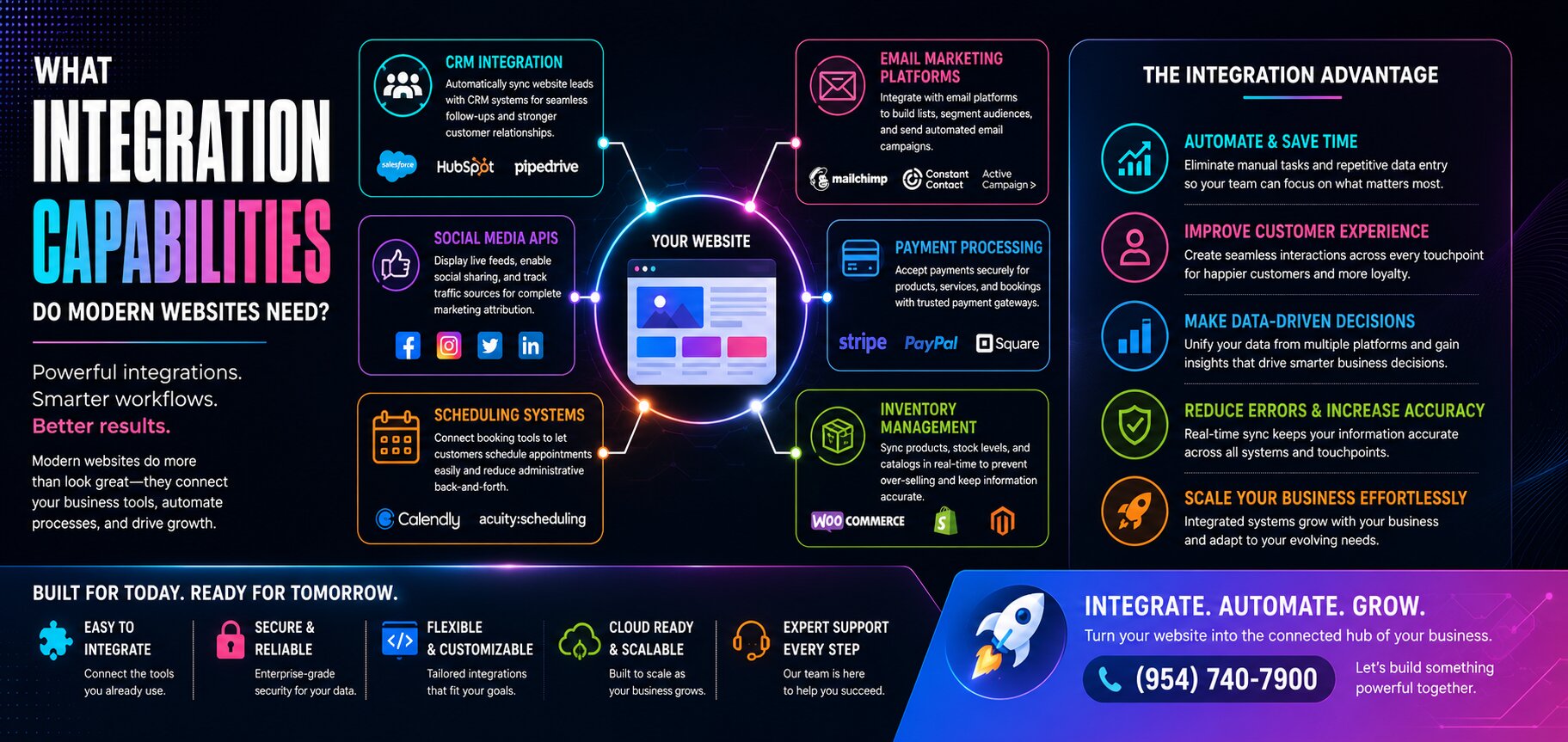
What Integration Capabilities Do Modern Websites Need?
- CRM Integration: Automatically sync website leads with customer relationship management systems like Salesforce, HubSpot, or Pipedrive for seamless follow-up processes.
- Email Marketing Platforms: Connect with services like Mailchimp, Constant Contact, or ActiveCampaign to nurture leads through automated email sequences.
- Social Media APIs: Display live social media feeds, enable social sharing, and track social media traffic sources for comprehensive marketing attribution.
- Payment Processing: Integrate secure payment gateways like Stripe, PayPal, or Square for e-commerce functionality and service bookings.
- Scheduling Systems: Connect appointment booking tools like Calendly or Acuity to streamline client scheduling and reduce administrative overhead.
- Inventory Management: Sync product catalogs and stock levels with e-commerce platforms to prevent overselling and maintain accurate product information.
Final Thoughts on Modern Website Features
Modern website features determine whether your online presence generates leads or loses potential customers to competitors. The ten essential features we’ve outlined directly impact search rankings, user experience, and conversion rates. Businesses that implement these features see measurable improvements in website performance and customer engagement within 60-90 days.
SFL Media specializes in developing websites with all these modern features for businesses throughout South Florida. Our website development process ensures your site meets current standards while remaining scalable for future needs. We understand the unique challenges facing businesses in Miami, Fort Lauderdale, and West Palm Beach markets.
Ready to upgrade your website with modern features that drive results? Contact our team for a comprehensive website audit or call (954) 740-7900 to discuss your project requirements.
Frequently Asked Questions About Modern Website Features
What are the most important website features in 2026?
The most important website features in 2026 are mobile-first responsive design, Core Web Vitals optimization, SSL security, AI-powered chatbots, and comprehensive analytics. These features directly impact search rankings and user experience. Websites missing these elements typically see 40-60% lower conversion rates than fully optimized sites.
How do I make my website mobile-friendly?
Making your website mobile-friendly requires responsive design that adapts to different screen sizes, touch-friendly navigation elements, and fast loading speeds on cellular connections. Use CSS media queries to adjust layouts, optimize images for mobile bandwidth, and ensure text remains readable without zooming. Google’s Mobile-Friendly Test tool can identify specific issues that need correction.
What is responsive web design?
Responsive web design is a development approach that creates websites that automatically adjust their layout, images, and content to work optimally on any device or screen size. It uses flexible grid systems, scalable images, and CSS media queries to provide consistent user experiences. Responsive design eliminates the need for separate mobile websites while ensuring functionality across all devices.
Why is website speed important?
Website speed is important because it directly affects search rankings, user experience, and conversion rates, with Google using Core Web Vitals as official ranking signals since 2021. Slow websites lose 53% of mobile visitors within three seconds of loading. Every 100-millisecond improvement in load time correlates with a 1% increase in conversion rates across all industries.
How can I improve my website user experience?
Improving website user experience requires fast loading speeds, intuitive navigation, mobile optimization, clear calls-to-action, and accessible design elements. Focus on reducing page load times, simplifying menu structures, and ensuring important information is easy to find. Regular user testing and analytics review help identify specific areas where visitors struggle or abandon the site.