
According to Statista, digital advertising spending reached $740 billion globally in 2026, with Google and Facebook commanding the largest market shares. The Google Ads vs Facebook Ads debate continues to challenge business owners across Miami, Fort Lauderdale, and West Palm Beach as they decide where to invest their advertising budgets.
Both platforms offer unique advantages for South Florida businesses, but choosing the wrong one can waste thousands in ad spend. SFL Media has managed campaigns across both platforms for local businesses and understands the nuances that determine success on each.
Google Ads captures demand while Facebook Ads creates it through targeted interest-based advertising.
How Do Google Ads and Facebook Ads Differ in Approach?
Google Ads operates on search intent, displaying advertisements when users actively search for specific products or services. Facebook Ads functions as an interruption-based platform, showing ads to users based on demographics, interests, and behaviors while they browse social content. This fundamental difference shapes everything from targeting strategies to creative requirements.
Google Ads excels at capturing bottom-funnel traffic when prospects are ready to buy. Someone searching “Fort Lauderdale digital marketing agency” demonstrates clear purchase intent. Facebook Ads performs better for brand awareness and nurturing prospects through the consideration phase with engaging visual content.
SFL Media’s South Florida clients often achieve the best results using both platforms strategically. Google Ads handles immediate conversions while Facebook Ads builds brand recognition and retargets website visitors with compelling offers.
What Are the Cost Differences Between Google Ads and Facebook Ads?
Google Ads typically costs more per click but generates higher conversion rates due to search intent. According to WordStream, the average cost per click across all industries on Google Ads is $4.22, while Facebook Ads averages $1.90 per click.
The higher Google Ads costs reflect the value of search intent. Users clicking on Google Ads are actively seeking solutions, making them more likely to convert. Facebook users are browsing socially, requiring more touchpoints before making purchase decisions.
SFL Media tracks cost per acquisition rather than cost per click for accurate ROI measurement. Our Fort Lauderdale clients often find Google Ads delivers lower cost per acquisition for high-value services despite higher click costs, while Facebook Ads works better for lower-priced products with visual appeal.
Which Platform Offers Better Targeting Capabilities?
Facebook Ads provides more granular demographic and interest-based targeting options than Google Ads. Facebook’s data collection allows targeting based on life events, purchase behaviors, job titles, and detailed interests. Google Ads focuses primarily on keyword intent, location, and device targeting with some demographic overlays.
Google Ads targeting strength lies in keyword matching and audience intent signals. The platform excels at reaching people actively searching for specific solutions. Facebook’s strength is behavioral targeting and lookalike audiences based on existing customer data.
SFL Media recommends Facebook Ads for businesses with detailed buyer personas and visual products. Google Ads works better for service-based businesses in South Florida where search intent drives conversions, such as legal services, home repairs, or B2B consulting.
Campaign Performance Metrics: Google Ads vs Facebook Ads
| Metric | Google Ads | Facebook Ads |
|---|---|---|
| Average CTR | 3.17% | 0.90% |
| Average CPC | $4.22 | $1.90 |
| Conversion Rate | 4.40% | 1.85% |
| Best for | High-intent searches | Brand awareness |
| Ad Format | Text-based | Visual-heavy |
When Should Your Business Choose Google Ads Over Facebook Ads?
Google Ads works best for businesses with high search volume keywords and immediate purchase intent. Service-based companies in Miami, Fort Lauderdale, and West Palm Beach typically see better results with Google Ads because customers actively search for solutions when problems arise.
Choose Google Ads if your business falls into these categories:
- Emergency services: Plumbing, HVAC, legal services, and medical practices benefit from capturing urgent search traffic.
- B2B services: Professional services like accounting, consulting, and digital marketing see strong ROI from search-based advertising.
- High-value purchases: Real estate, automotive, and luxury services perform well with search intent targeting.
- Local services: Home improvement, restaurants, and retail stores benefit from local search visibility.
- Niche products: Specialized products with specific search terms often find ready buyers through Google Ads.
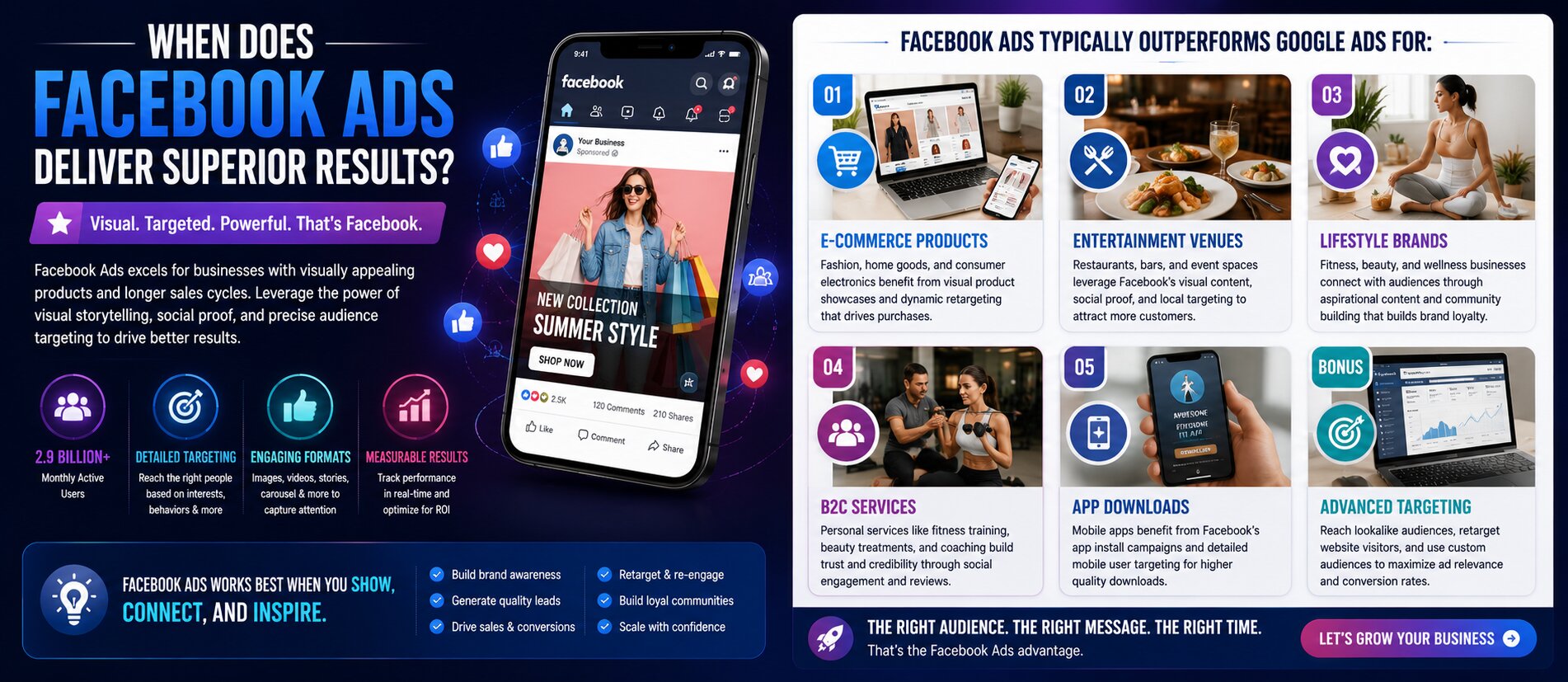
When Does Facebook Ads Deliver Superior Results?
Facebook Ads excels for businesses with visually appealing products and longer sales cycles. E-commerce brands, restaurants, and lifestyle businesses often achieve better ROI through Facebook’s visual storytelling capabilities and detailed audience targeting.
Facebook Ads typically outperforms Google Ads for:
- E-commerce products: Fashion, home goods, and consumer electronics benefit from visual product showcases and dynamic retargeting.
- Entertainment venues: Restaurants, bars, and event spaces leverage Facebook’s social proof and visual content effectively.
- Lifestyle brands: Fitness, beauty, and wellness businesses connect with audiences through aspirational content and community building.
- B2C services: Personal services like fitness training, beauty treatments, and coaching build trust through social engagement.
- App downloads: Mobile apps benefit from Facebook’s app install campaigns and detailed mobile user targeting.
How to Optimize on Each Platform
Google Ads ROI optimization focuses on keyword relevance, ad quality, and landing page experience. According to Google, Quality Score directly impacts ad costs and positions, making relevance crucial for ROI.
SFL Media’s Google Ads optimization strategies include negative keyword lists, ad extension utilization, and conversion tracking setup. We focus on high-commercial-intent keywords and create tightly themed ad groups for better Quality Scores and lower costs.
Facebook Ads ROI improves through creative testing, audience refinement, and funnel optimization. The platform rewards engaging content with lower costs and broader reach. We test multiple creative formats, use video content extensively, and implement pixel-based retargeting for our South Florida clients.
Final Thoughts on Google Ads vs Facebook Ads ROI
The Google Ads vs Facebook Ads decision shouldn’t be either-or for most businesses. Google Ads captures existing demand while Facebook Ads creates new demand through targeted interest-based advertising. SFL Media’s most successful South Florida clients use both platforms strategically, with Google Ads handling immediate conversions and Facebook Ads building long-term brand awareness.
Your platform choice depends on your business model, target audience behavior, and campaign objectives. Service-based businesses in Miami, Fort Lauderdale, and West Palm Beach often see immediate ROI from Google Ads, while product-based companies benefit from Facebook’s visual storytelling capabilities.
Need help determining which advertising platform delivers better ROI for your South Florida business? Contact our team for a free advertising audit or call (954) 740-7900 to discuss your digital advertising strategy.
Frequently Asked Questions About Google Ads vs Facebook Ads
Which is better Google Ads or Facebook Ads?
Google Ads performs better for capturing high-intent search traffic while Facebook Ads excels at brand awareness and visual product promotion. The better platform depends on your business goals, with service-based companies typically seeing higher ROI from Google Ads and e-commerce brands often performing better on Facebook Ads.
What is the average cost of Google Ads vs Facebook Ads?
Google Ads averages $4.22 per click across all industries while Facebook Ads averages $1.90 per click. However, Google Ads typically delivers higher conversion rates due to search intent, often resulting in lower cost per acquisition despite higher click costs.
Which platform has better targeting options?
Facebook Ads offers more detailed demographic and interest-based targeting options, including life events, behaviors, and detailed interests. Google Ads provides superior intent-based targeting through keyword matching and search behavior, making it better for capturing ready-to-buy customers.
How do I choose between Google and Facebook advertising?
Choose Google Ads if your customers actively search for your products or services and you need immediate conversions. Select Facebook Ads if you sell visually appealing products, need brand awareness, or want to target specific demographics and interests rather than search intent.
What type of business should use Google Ads vs Facebook Ads?
Service-based businesses like legal, medical, and home improvement companies should prioritize Google Ads for capturing search intent. E-commerce, restaurants, entertainment venues, and lifestyle brands typically achieve better results with Facebook Ads due to visual content opportunities and social engagement.