
According to HubSpot, 46% of all Google searches have local intent, making the choice between local and national SEO crucial for business success. Local SEO targets customers in specific geographic areas like Miami, Fort Lauderdale, and West Palm Beach, while national SEO aims to capture audiences across the entire country. Your business type, target market, and growth goals determine which approach delivers better results.
In 2026, search behavior continues evolving with voice search and AI-powered results changing how customers find businesses. SFL Media has helped South Florida companies navigate this decision by analyzing their customer base, competition, and revenue potential. The right SEO strategy can mean the difference between steady local growth and missed opportunities for broader expansion.
Local SEO delivers higher conversion rates because it connects businesses with customers ready to buy nearby, while national SEO offers unlimited market potential.
What is Local SEO and How Does It Work?
Local SEO is the practice of optimizing your online presence to attract customers from specific geographic locations through location-based search results. This strategy focuses on appearing in Google’s Local Pack, Google Maps, and “near me” searches when potential customers look for businesses in their immediate area. Local SEO relies heavily on Google Business Profile optimization, local citations, and location-specific content.
The foundation of local SEO includes claiming and optimizing your Google Business Profile with accurate business information, hours, photos, and regular posts. Local citations across directories like Yelp, Yellow Pages, and industry-specific platforms help establish your business’s location authority. Customer reviews play a critical role, as they directly influence both rankings and conversion rates.
SFL Media’s Fort Lauderdale clients typically see results from local SEO within 3-6 months because local competition is often less intense than national markets. Local SEO also benefits from proximity signals, where Google prioritizes businesses closest to the searcher’s location. This geographic advantage makes local SEO particularly effective for service-based businesses, restaurants, retail stores, and professional services.
Local keyword targeting differs significantly from national approaches. Instead of targeting “digital marketing agency,” a local business would optimize for “digital marketing agency Fort Lauderdale” or “SEO services near me.” This specificity reduces competition while attracting highly qualified leads who are more likely to convert into customers.
Understanding National SEO Strategy
National SEO is a comprehensive approach to ranking for broad, high-volume keywords across the entire country without geographic limitations. This strategy targets customers regardless of location and focuses on building domain authority, creating extensive content libraries, and competing for competitive industry terms. National SEO campaigns typically require larger budgets and longer timeframes to achieve results.
Content strategy forms the backbone of national SEO success. Businesses must create hundreds or thousands of pages targeting various keyword combinations, user intents, and industry topics. Technical SEO becomes more complex as websites scale to handle increased traffic and content volume. Site architecture, page speed optimization, and mobile performance become critical ranking factors.
Link building for national SEO requires acquiring high-authority backlinks from diverse sources across different regions and industries. According to Ahrefs, websites need an average of 74 referring domains to rank on the first page for competitive national keywords. This process often takes 12-24 months to show significant results.
National SEO works best for e-commerce businesses, SaaS companies, online service providers, and brands with products that ship nationwide. SFL Media recommends national SEO for businesses with substantial marketing budgets and the ability to serve customers across multiple states or regions effectively.
Which Businesses Should Choose Local SEO?
Local SEO delivers the best return on investment for businesses that serve customers within specific geographic boundaries or rely on foot traffic for revenue. Restaurants, dental offices, law firms, home service contractors, retail stores, and medical practices benefit most from local search optimization. These businesses depend on proximity and local reputation to attract customers.
Service area businesses like plumbers, electricians, and HVAC companies should prioritize local SEO because customers typically choose providers based on location and availability. According to BrightLocal, 87% of consumers read online reviews for local businesses, making reputation management a crucial component of local SEO success.
Brick-and-mortar retailers competing against online giants like Amazon need local SEO to highlight their immediate availability and personalized service advantages. Local SEO helps these businesses appear when customers search for “buy [product] near me” or “[product] store Fort Lauderdale.” This strategy captures customers who prefer to see, touch, or immediately purchase products.
Professional services including accountants, lawyers, real estate agents, and consultants should focus on local SEO when they primarily serve clients within driving distance. These businesses build trust through face-to-face relationships and local community involvement, making geographic targeting more effective than broad national campaigns.
When Does National SEO Make More Sense?
National SEO becomes the superior choice for businesses with products or services that transcend geographic boundaries and can serve customers anywhere in the country. E-commerce stores, online software companies, digital service providers, and subscription-based businesses typically achieve better results with national SEO strategies. These companies can fulfill orders or deliver services regardless of customer location.
Businesses with unique products or specialized expertise often find larger audiences through national SEO than local marketing. Niche manufacturers, specialized consultants, and innovative technology companies may have limited local demand but significant national interest. National SEO allows these businesses to reach their ideal customers across multiple markets.
Companies planning rapid expansion or franchise development should invest in national SEO to build brand recognition before entering new markets. This approach creates awareness and demand ahead of physical expansion, making local market entry more successful. SFL Media has helped several South Florida businesses prepare for national growth through strategic content development and brand building.
Budget considerations also influence this decision. Businesses with substantial marketing resources can compete effectively in national markets, while smaller companies might struggle against established national competitors. National SEO requires consistent content creation, extensive link building, and ongoing technical optimization that demands significant time and financial investment.
Cost and Timeline Comparison
| Factor | Local SEO | National SEO |
|---|---|---|
| Monthly Budget | $1,500 – $5,000 | $5,000 – $25,000+ |
| Results Timeline | 3-6 months | 12-24 months |
| Content Requirements | 20-50 pages | 200-1000+ pages |
| Link Building Needs | 10-30 domains | 50-200+ domains |
| Competition Level | Low to Medium | High to Extreme |
| Conversion Rate | 3-8% | 1-3% |
Can You Combine Local and National SEO Strategies?
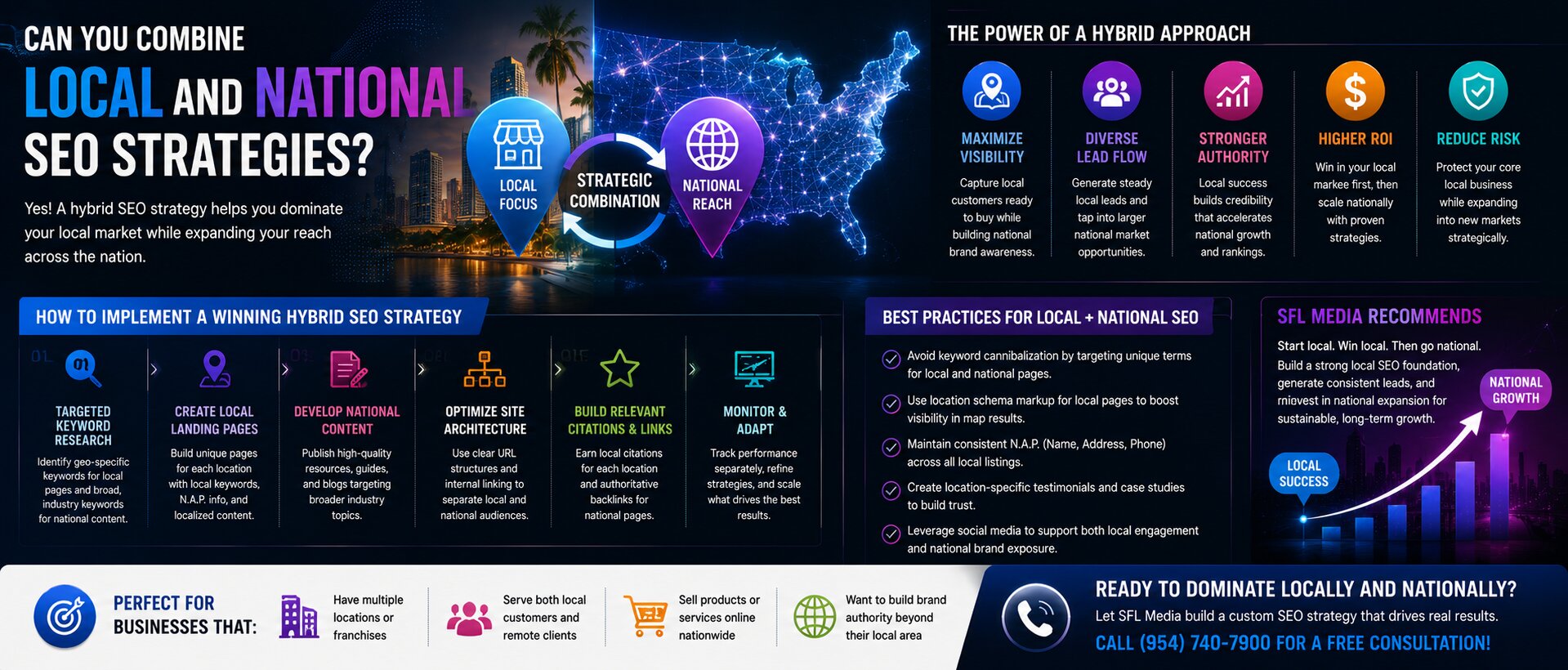
Many businesses successfully implement hybrid SEO strategies that combine local and national elements to maximize their online visibility and customer reach. This approach works particularly well for companies with multiple locations, franchises, or businesses that serve both local and remote customers. The key lies in creating separate content strategies and targeting different keywords for each audience segment.
Multi-location businesses should create location-specific landing pages for each city or region they serve while maintaining national-level content for broader industry topics. For example, a law firm might target “personal injury lawyer Miami” for local searches while also creating comprehensive guides about federal law changes that appeal to a national audience. This strategy captures both immediate local leads and builds authority for broader topics.
SFL Media recommends starting with local SEO to establish a strong foundation before expanding to national markets. Local success provides case studies, testimonials, and proven processes that support national expansion efforts. Once local SEO generates consistent leads and revenue, businesses can reinvest profits into national SEO campaigns without risking their core local customer base.
The hybrid approach requires careful keyword research to avoid cannibalization between local and national pages. Local pages should target geo-specific terms while national content focuses on broader industry keywords. Proper site architecture with clear URL structures helps search engines understand the intended audience for each page type.
Final Thoughts on Choosing Your SEO Strategy
The local SEO vs national SEO decision ultimately depends on your business model, target audience, budget, and growth timeline. Local SEO delivers faster results and higher conversion rates for location-dependent businesses, while national SEO offers unlimited market potential for companies that can serve customers anywhere. Most successful businesses eventually implement elements of both strategies as they grow and expand their market reach.
SFL Media has guided hundreds of South Florida businesses through this strategic decision by analyzing their unique circumstances, competition, and growth objectives. We recommend starting with the approach that aligns with your current business model and customer base, then expanding your strategy as resources and opportunities allow. The most important factor is choosing a strategy you can execute consistently with sufficient resources and expertise.
Ready to develop the right SEO strategy for your South Florida business? Contact our team for a comprehensive analysis of your market opportunity, or call (954) 740-7900 to discuss your specific goals and budget.
Frequently Asked Questions About Local SEO vs National SEO
What is the main difference between local and national SEO?
Local SEO targets customers within specific geographic areas using location-based keywords and Google Business Profile optimization, while national SEO aims to rank for broad keywords across the entire country. Local SEO focuses on “near me” searches and local directories, whereas national SEO emphasizes domain authority and comprehensive content strategies. The choice depends on whether your business serves customers primarily in your immediate area or can fulfill orders nationwide.
Which SEO strategy is better for small businesses?
Local SEO typically delivers better results for small businesses because it targets customers ready to buy nearby with less competition and lower costs. Small businesses can achieve first-page rankings for local keywords within 3-6 months, while national SEO often requires 12-24 months and significantly larger budgets. Local SEO also provides higher conversion rates since customers searching locally have immediate purchase intent.
How do I optimize for local search?
Local search optimization starts with claiming and fully optimizing your Google Business Profile with accurate information, photos, and regular posts. Build local citations across relevant directories, encourage customer reviews, and create location-specific content targeting geo-modified keywords. Ensure your website includes your address, phone number, and service areas prominently, and build relationships with other local businesses for link opportunities.
What are the main benefits of national SEO?
National SEO offers unlimited market potential, higher traffic volumes, and the ability to serve customers regardless of location. This strategy works best for e-commerce businesses, online service providers, and companies with products that ship nationwide. National SEO builds brand recognition across multiple markets and supports business expansion into new geographic regions, though it requires larger budgets and longer timelines to achieve results.
Can I do both local and national SEO simultaneously?
Yes, many businesses successfully combine local and national SEO strategies by creating separate content for different audiences and keyword sets. Start with local SEO to build a foundation, then expand to national topics as resources allow. Use location-specific landing pages for local searches while developing broader industry content for national keywords, ensuring proper site architecture prevents keyword cannibalization between local and national pages.